Molecular Pathology Laboratory
                        
Understanding disease
                                       One molecule at a time....

Al-Mulla
Lab

Diagnostic
Division

Patients'
information
Doctors'
information
Students' Material

Literature

Contact us
 

      Welcome


The genome of Arabs is not yet explored. Although it potentially represents a very rich source of genetic variation, uniqueness and heritable illnesses. The Molecular Pathology Laboratory was established in 2000 in an attempt to study, diagnose and understand diseases at the molecular level specifically utilizing the uniqueness of the Arabian genome for this purpose.    


New Discoveries from our laboratory


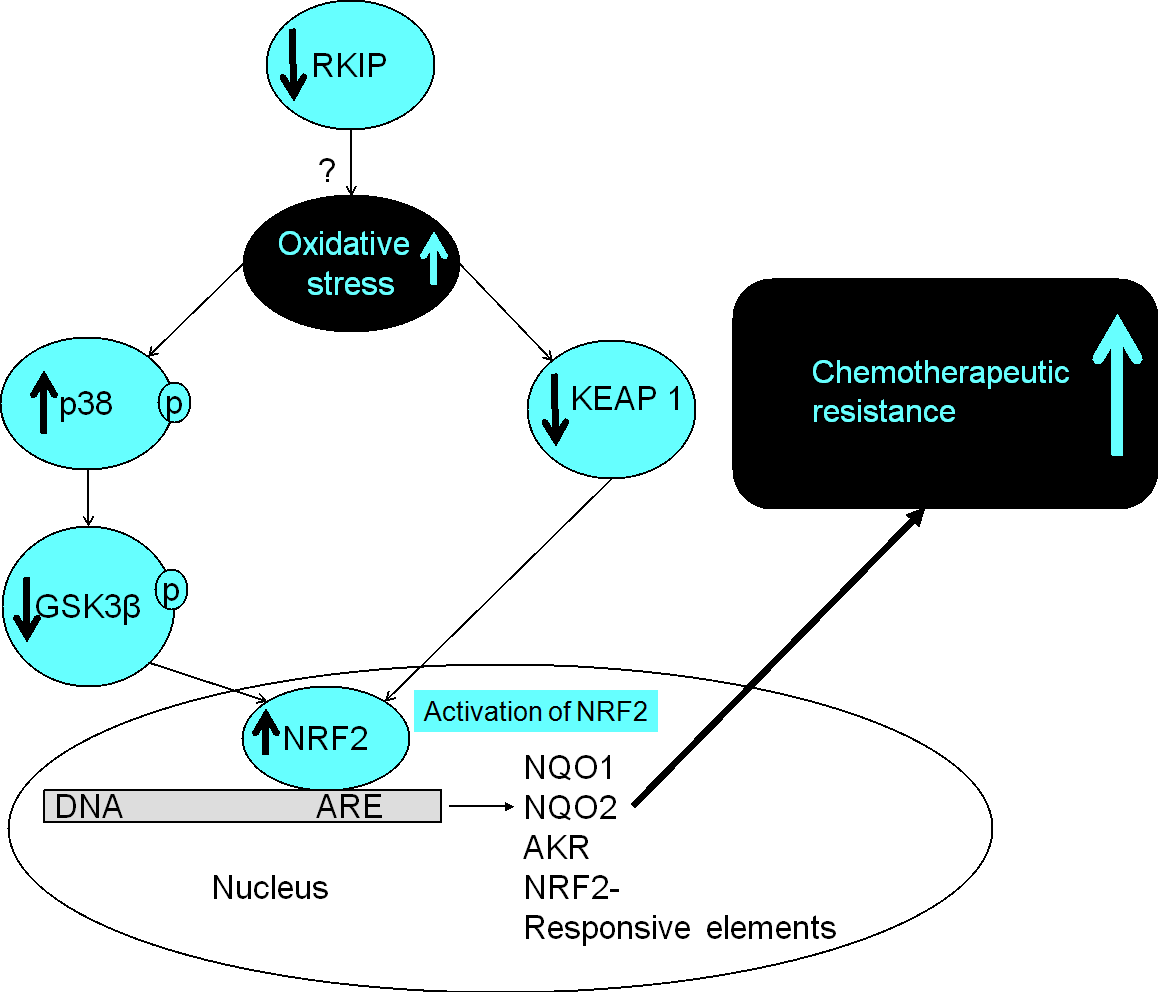
Using haplotype mapping we were able to identify genomic sites linked to metastatic behaviour in colorectal cancer. These regions are now being refined and mapped at high resolution to identify the genes involved. on this front we have identified RKIP (PEBP1) as an independent marker for metastasis and reduced survival. Moreover, we found RKIP to be the only marker to date to be able to detect patients with early colorectal caner that relapse with metastasis. Such discovery is unprecedented but reflects our vision.

We now offer our patented "METASTASIS PREDICTION" method for detecting patients with bad prognosis. The test is mainly applied to early stage (Dukes' A and B) colorectal cancer to predict, with high accuracy,  metastatic relapse. This is a collaborative project between our Laboratory and Prof. Walter Kolch in the Beatson Institute for Cancer Research. If you wish to join the study please send 5 micron sections (3 sections) of formalin-fixed paraffin-embedded to us on our contact address.

Our RKIP data has now been confirmed by two studies Dr. Zlobec  et al. and Dr. Minoo et al.

The RKIP association with survival in cancer is now unfolding and generating global interest....


Using Differential display we have identified Carbonyl reductase (CR3) as a metastasis suppressor gene in ovarian cancer.

Diabetes is another focus for our laboratory. More than 20% of our population suffers from type II diabetes, this will represent a major burden for the health service in Kuwait. We noticed that diabetes cluster in families and in collaboration with Dr. S. Mojimini and Dr, N. Abdulla a haplotype mapping approach is being conducted on these families.

A more detailed and focused search for biochemical and molecular defects in type II Diabeles is being conducted in collaboration with Dr. M. Bitar. The approach utilizes GK type II genetic model of diabetes.

"We welcome International collaboration from external agencies and companies to speedup future discoveries"


  • In 2006 we have established a Molecular Genetics Diagnostic Service Division that is focused on delivering state-of-the-art diagnostic service for the Kuwaiti population. Introducing these services in the health sector gives our laboratory a unique opportunity to meet probands.


Copyright al-mulla.org© 2007

    Hit Counter